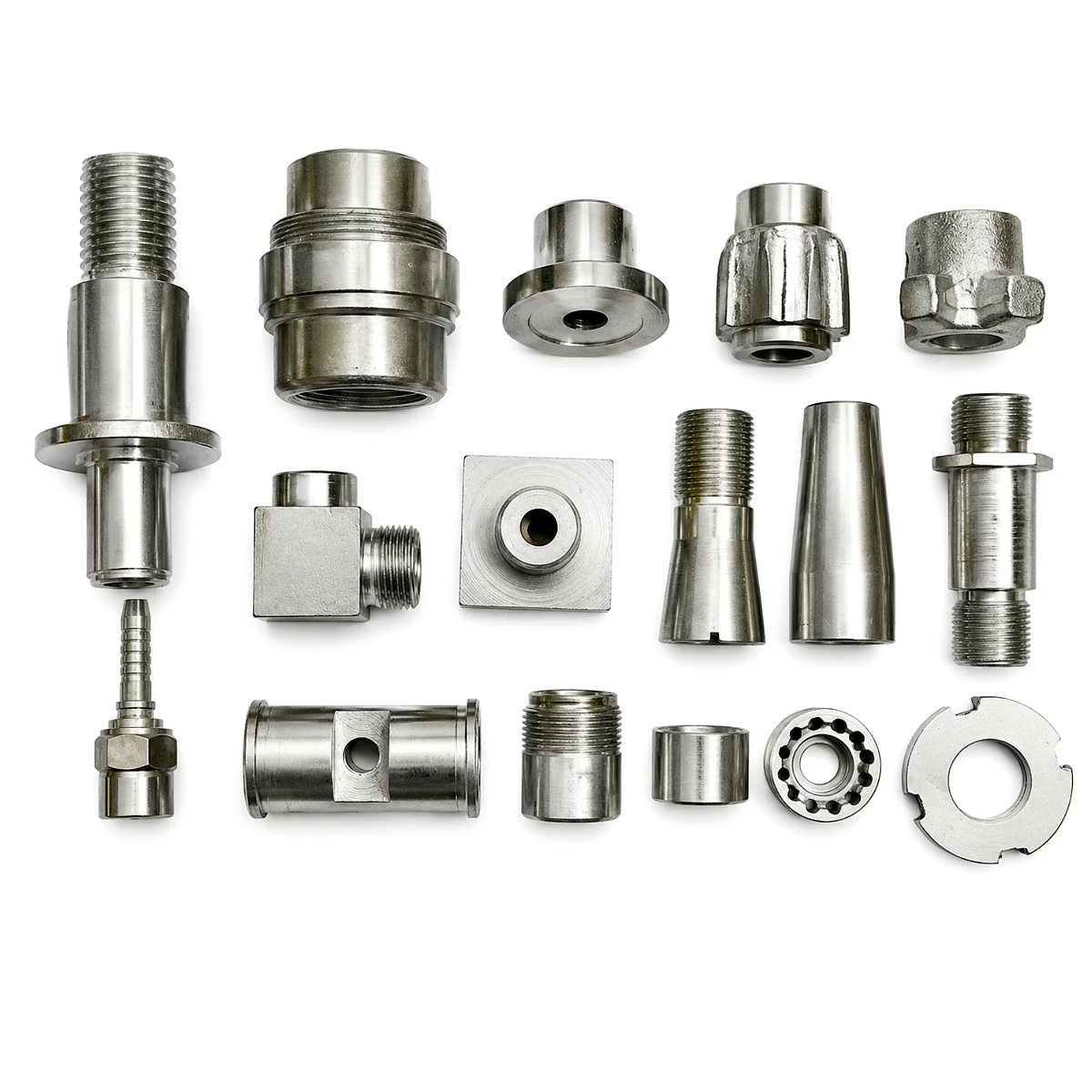
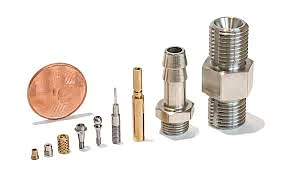
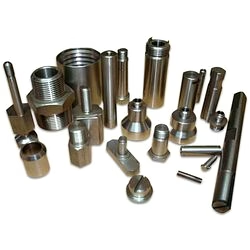


PRECISION MACHINED COMPONENTS
-
Product is not available
Brand:
Country Of Origin : India
Precision Machined Components for OEM Assemblies
Precision machined components supplier tailored for OEM assembly lines.
Parts are produced to tight dimensional tolerances. Each part is engineered for consistent fit and repeatability. CNC turning and milling form the primary process route for common geometries.
Material selection follows drawing requirements and assembly compatibility. Finishes and coatings are specified to meet mating, wear, and corrosion constraints.
Production supports prototype runs through repeat volume batches. Available for bulk sourcing and build-to-print production. Lead time is determined by batch size and machining route.
Dimensional inspection and batch traceability support incoming inspection. Protective packing is configured to preserve critical features during transit. Technical drawing review is available to align tolerances and process choice.
Industrial Assembly and Sector Applications
Precision machined components are intended for OEM integration where repeatable fit and interchangeability matter. Typical use fits include gear housings, interface flanges, and precision inserts that control alignment. Buyers such as OEM procurement teams and assembly engineers rely on consistent tolerance control to reduce rework.
Technical Specifications and Manufacturing
Manufacturing uses CNC turning and milling with controlled toolpaths. Process planning emphasizes tolerance stack management. Typical tolerances are held per drawing and defined fit class.
Material options are chosen from standard engineering grades based on application needs. Surface treatments address corrosion and wear as required. Threading and critical bores receive dedicated operations and inspection steps.
Quality Control and Traceability
Dimensional inspection is performed using calibrated instruments and CMM checks where required. Batch traceability ties inspection records to shipment lots. Inspection evidence supports assembly validation and incoming quality control.
Procurement & Supply Terms
Production scales from prototype quantities to recurring volume batches. Scheduling depends on part complexity and order band. Protective packing is selected to protect precision features in transit and handling.
Applications and Buyer Workflows
OEM Scheduled Production
Procurement teams use build-to-print workflows to move parts into scheduled production runs. The focus is on repeatability and inspection data for lot acceptance.
Replacement and Maintenance
Maintenance planners order matched parts to restore assembly tolerances. Rapid drawing review reduces qualification time for replacement batches.
Prototype to Production Scaling
Engineering teams validate fit during prototyping. Process control and small-batch inspection allow a smooth transition to volume machining.
Request OEM and Volume Pricing
Provide drawings and target volumes to obtain lead-time and pricing details. Quotes include process routing and inspection scope to confirm production readiness.
Frequently Asked Questions
- What tolerance bands and interface fits are supported? Standard practice is to produce parts to drawing-defined tolerances. Tolerance holding and fit class are reviewed during drawing assessment to confirm machining route and inspection checkpoints. (moq_bulk_order)
- Can parts be produced from custom CAD drawings with validated tolerances? Yes. Drawing-based build-to-print workflows include technical review and a proposed machining plan that aligns tolerance requirements with inspection methods. (pricing_cost)
- What inspection and documentation support is available? Dimensional inspection reports and batch traceability records are provided. Specific test evidence is listed on the inspection report and accompanies shipments when requested. (certifications_compliance)
- How do order volume and complexity affect lead time? Lead time scales with batch size and process complexity. Prototype runs are scheduled separately from volume production to avoid disruption to recurring batches. (logistics_delivery)