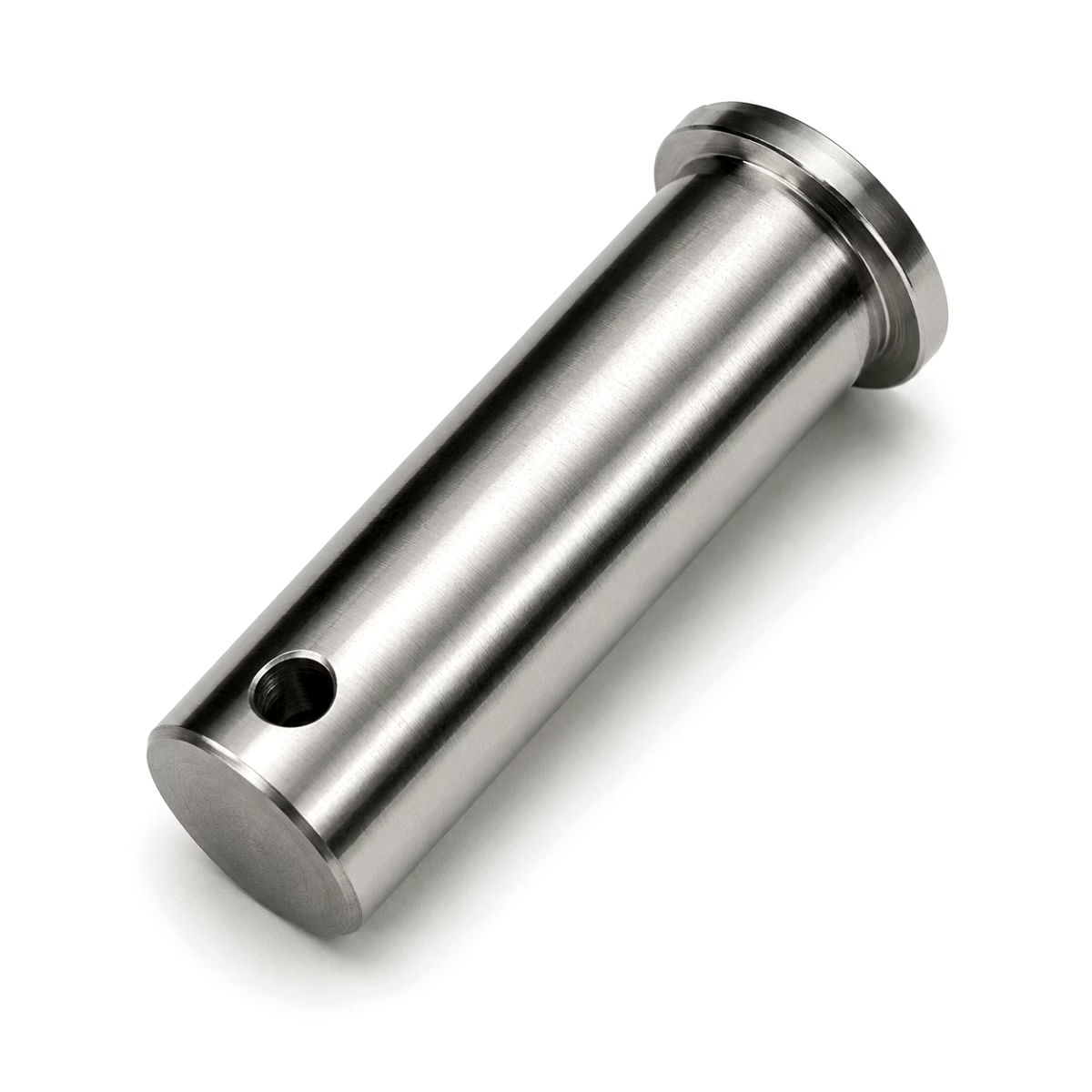
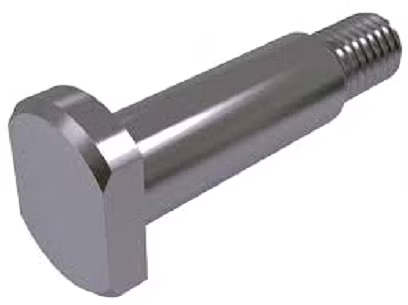
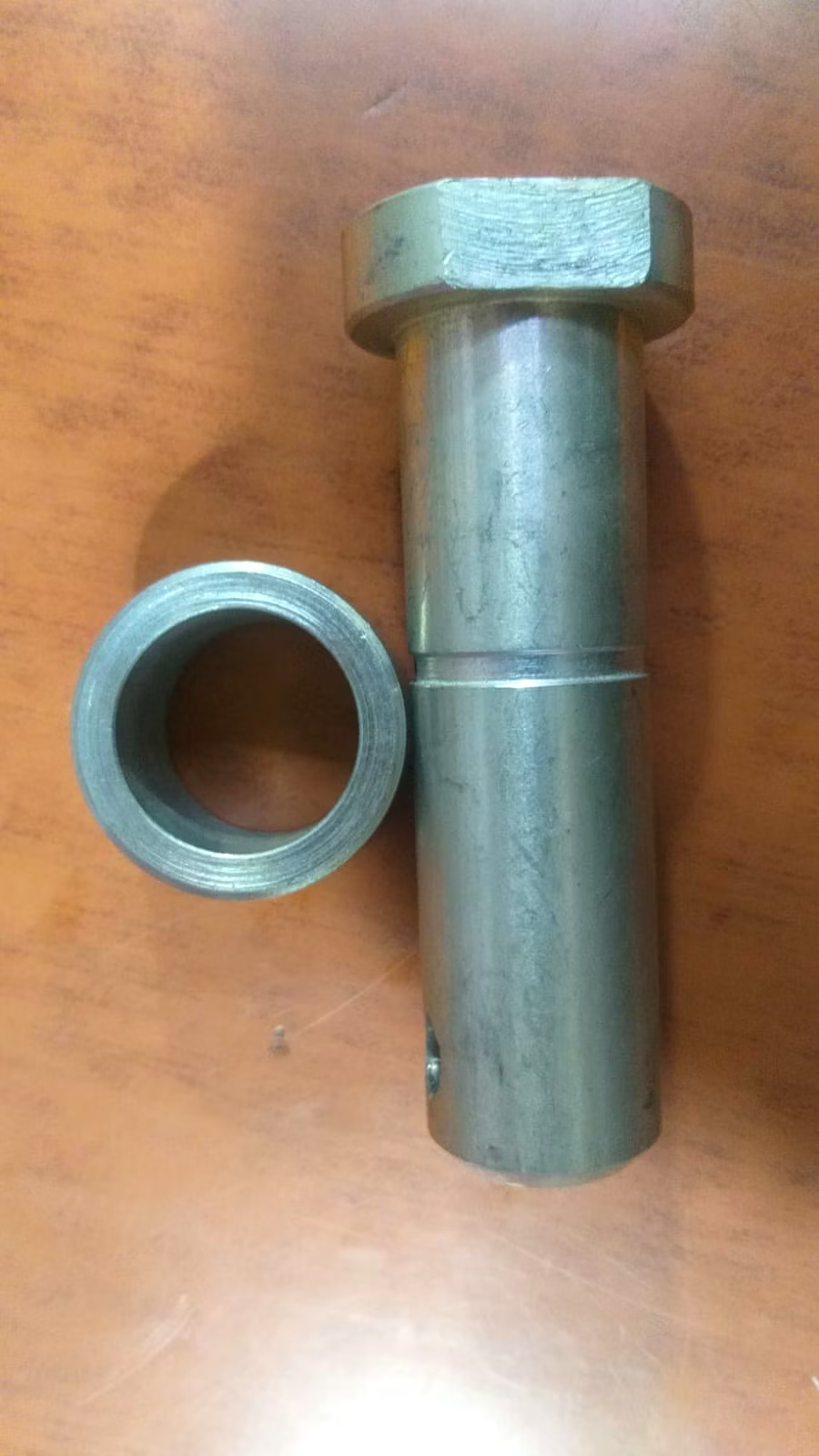


Clevis Pin
-
Product is not available
Brand:
Country Of Origin : India
Clevis Pin for Pivot and Linkage Connections
The Clevis Pin is a cylindrical fastener used to form removable pivot joints and linkages. It is commonly employed in mechanical linkages, clevis assemblies, and hinged connections where secure retention and easy disassembly are required. Procurement teams select clevis pins by diameter, length, and retention method.
Manufacture and Fit
Production emphasizes dimensional straightness, shoulder geometry, and finish to ensure smooth pivoting and consistent retention. Inspection validates overall length, diameter, and surface condition to ensure compatibility with mating clevis components.
Supply and Ordering
Available for bulk sourcing and scheduled production runs. Protective packaging secures pins to avoid surface damage during transit. Buyers should specify retention style and any coating requirements when ordering.
Application Scenarios
Clevis Pins are used across agricultural linkages, equipment pivot points, and removable joint assemblies where ease of service and secure retention are essential. They serve in OEM assembly, field replacement, and project-level installation tasks where interchangeability matters.
Production and Quality Controls
Manufacturing processes include turning and finish grinding for straightness and controlled diameter. Inspection covers dimensional tolerances and surface finish to reduce wear in pivoting applications. Coatings or plating options address corrosion resistance where required.
Commercial and Delivery Notes
Commercial volume procurement is supported. Lead time will vary with coating and retention complexity. Packaging maintains pin straightness and protects bearing surfaces for immediate assembly readiness.
Frequently Asked Questions
- Can clevis pins be supplied with specific retention features? Yes. Specify cotter holes, circlip grooves, or split-pin features and the pins will be produced and inspected accordingly.
- Which finishes and coatings are available? Options include plating and passivation selected to match environmental exposure and corrosion resistance needs.
- What inspection documentation is provided? Dimensional inspection and batch traceability records are provided to support incoming verification.
- How do order volumes affect lead time? Larger repeat runs reduce turnaround; custom retention features or finishes may increase lead time.